The Yield You Have to Work For: Why Shallow-Bay Still Stands Out
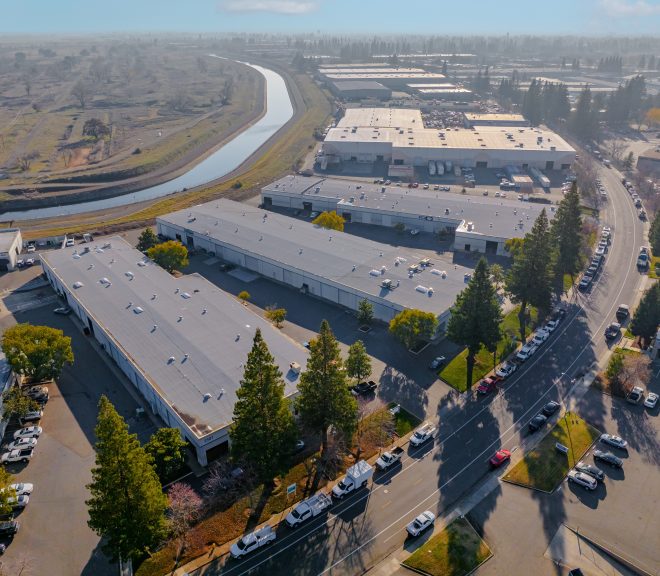
Why small multi-tenant industrial real estate can still offer opportunity through active management, short leases, and disciplined operations.
For every investment I consider, I compare it to a bond first.
Right now, a ten-year Treasury pays you about four and a half percent to sit and wait. Go out to investment-grade corporates, and you pick up maybe half a point. Reach for high yield, and the spread over Treasuries is about as thin as I’ve seen it in twenty years, which tells you the market won’t pay you much to take real credit risk today.
That’s the bar everything else has to clear.
Comparing Real Estate Returns With Bonds
I think about bonds a lot because they’re honest.
A bond is a promise: a fixed coupon, and your money back if the borrower makes it. That’s the whole deal, and it’s also the ceiling. The best thing that happens is you get paid in full.
Inflation works against it the entire time, quietly taking value out of those fixed payments while you wait.
So when someone says “risk-adjusted return,” I don’t look at the yield first. I look at what I’m actually being paid for.
A five percent coupon with no growth, in a market that says you’re underpaid for the risk, isn’t safe just because we call it a bond. You know the return, you know inflation will chip at it, and there’s no second act.
That’s fine for what it is. I just want to call it what it is.
Why Shallow-Bay Industrial Real Estate Became More Attractive
That gets me to the part of real estate we’ve spent our careers in, and that the market has lately decided it likes: shallow-bay, multi-tenant light industrial.
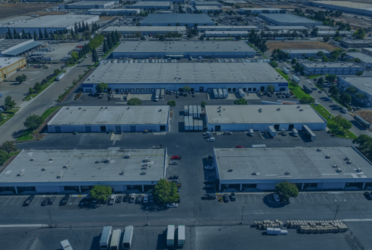
These are small buildings, often 5 to 20,000 square feet, divided into units and leased to a dozen tenants at a time.
The HVAC contractor, the e-commerce outfit shipping returns, the cabinet shop, and the small medical-device company that needs a little space and a roll-up door.
For most of my thirty years in this business, almost nobody wanted these buildings.
Institutional money wanted the opposite: the half-million-square-foot box on a long lease to one good-credit tenant. Write one check, sign one lease, collect for fifteen years, never visit.
That’s real estate behaving like a bond, and that was the appeal.
Our little multi-tenant buildings were the other thing entirely. Leases rolled constantly. They required a full-time property manager. They were too small and too much work for a large allocator to bother with.
They sat there underpriced for years, and we were happy to own them.
What Changed in Shallow-Bay Industrial
Then a few things changed at once.
COVID broke supply chains everybody had taken for granted. The long bet on making everything in one country halfway around the world turned into tariffs and a slow, expensive push to bring critical things closer to home.
E-commerce turned every neighborhood into a delivery problem that needs space near people.
And almost nobody builds new shallow-bay industrial, because the numbers on small units at today’s construction costs don’t work.
Demand went up. Supply didn’t.
The tenants also turned out to be small businesses with nowhere cheaper to go and enough margin to take a rent increase.
Capital that wouldn’t return our calls ten years ago now calls this a conviction theme.
Popularity Creates a New Risk: Overpaying
I’ve been around long enough to get nervous when my own thesis becomes everybody’s thesis.
By the time the overlooked thing is obvious, the easy part, the rerating that pays you just for being early, is gone.
Buying this asset class today simply because it’s popular is how you overpay for it.
We’re as capable of overpaying as anyone, so we watch our basis closely.
The opportunity is no longer just about recognizing an overlooked property type before everyone else does. Once more capital enters the market, the question becomes whether you can create a return after the easy pricing advantage disappears.
Why Property Management Matters in Shallow-Bay
Here’s what the new crowd tends to miss, and why I still believe in these buildings. The same things that kept the big money out are what protect the operator who stays in.
You can’t run them from a spreadsheet. They take real asset enhancement and real property management: leasing a dozen small spaces, handling turnovers, knowing your tenants by name, and knowing which are growing and which are quietly in trouble. It’s work.
And work is one of the few edges that doesn’t get competed away when capital piles in. When the market stops handing you a return, what’s left is the return you make by running the asset better than the next owner.
Most of the money chasing this theme isn’t built to do that.
Short-Term Industrial Leases Can Create a Different Income Profile
So here’s the comparison I actually care about.
A bond pays a fixed coupon for the credit risk you’re underpaid to take, and inflation grinds on it the whole way. A well-bought, well-run set of small industrial buildings pays a current yield, too, but the leases are short. That means rents can reset with inflation instead of getting eaten by it.
The income also spans a dozen tenants rather than one. And you can own the buildings for less than it would cost to build in a market where nobody is building.
But there’s a catch. None of it shows up on its own.
In Industrial Real Estate, the Work Can Be the Investment Edge
With a bond, you do nothing, and the coupon comes. With these properties, you have to earn it.
That suits our team at Rising Realty Partners. Thirty years in, I trust the returns we have to work for more than the ones that come in the mail. The yield that nobody has to lift a finger for is usually the one the market has already fully priced in.
The work is the point.
— Christopher C. Rising
Related Insights
Downtown Los Angeles Forgot Who Pays The Rent
An examination of how business taxes, public safety, and city policy are shaping small-business growth and Downtown Los Angeles’ recovery.
AI in Commercial Real Estate: How Unified Data Helps Teams Work Smarter
Explore how AI and unified commercial real estate data can reduce repetitive work, improve reporting, support building operations, and help experienced teams make faster decisions.
The Hidden Cost of Self-Managing Commercial Real Estate
Why small multi-tenant industrial real estate can still offer opportunity through active management, short leases, and disciplined operations.
Where you can find us
Rising Realty Partners
601 W 5th Street, Suite 215, Los Angeles, CA 90071
 Our Company
 Our Team
 Our Suite of Services
 Invest With Us
 News
News Insights
 Videos
 Podcast